

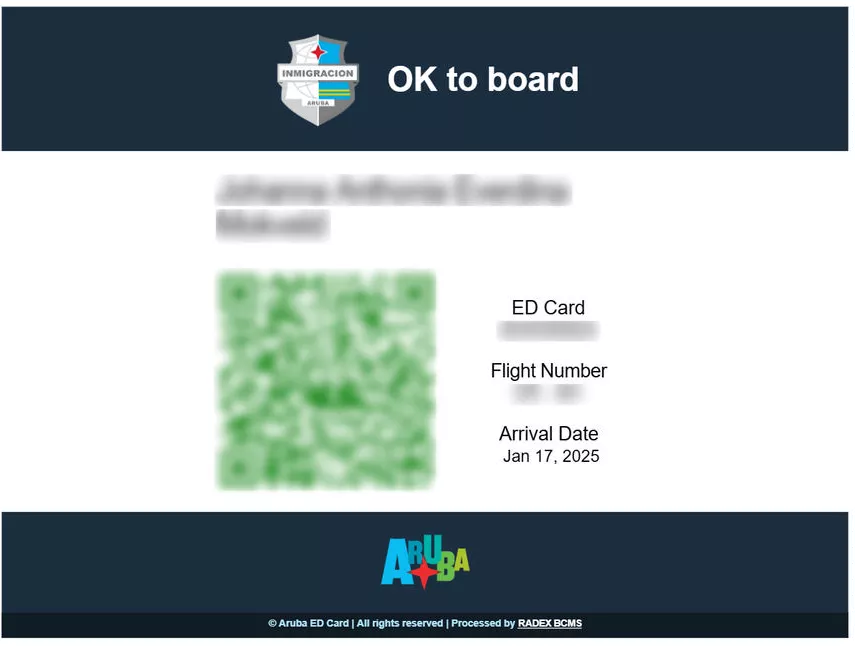
What Is the Aruba ED Card?
The Aruba ED Card (Embarkation/Disembarkation Card) is a mandatory online travel document required for every visitor entering Aruba. It is important to understand that the ED Card is not a visa – it is a separate, simpler document that serves a different purpose.
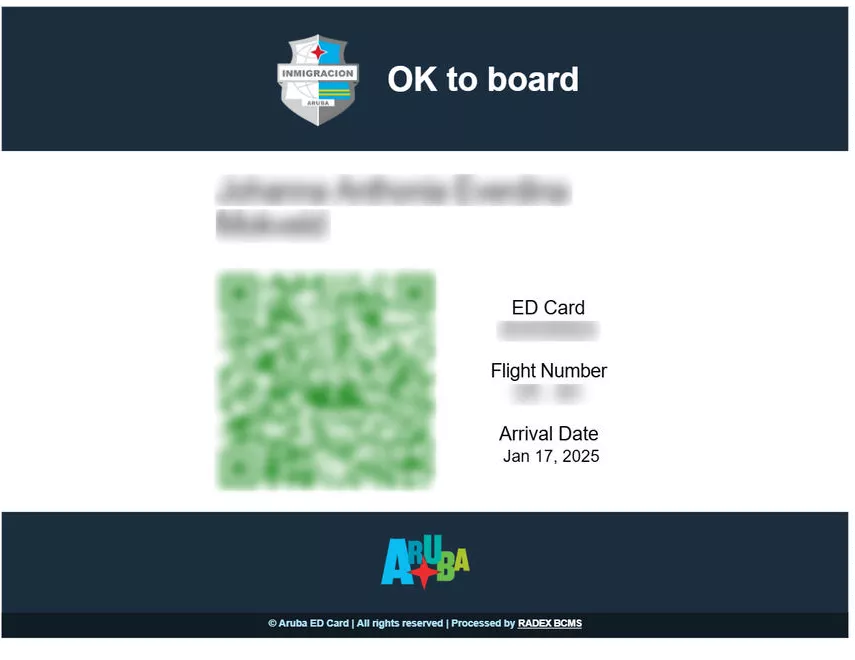
The ED Card costs $20 per person and processes entirely online through the official portal at edcardaruba.aw. Processing takes 24-72 hours, and you receive a digital confirmation with a QR code. The ED Card is valid for a single entry within 30 days of approval.
Every visitor to Aruba needs an ED Card, regardless of their nationality or whether they also need a visa. This includes adults, children, and even infants. For a complete overview of what the ED Card covers, see our detailed ED Card explanation.
ED Card vs Visa: Key Differences
The most common question travelers ask is whether the ED Card is the same as a visa. The answer is no – they are fundamentally different documents with different purposes, costs, and requirements.
The ED Card is:
- An online travel registration form
- Required for ALL visitors to Aruba
- Costs $20 per person
- Processes in 24-72 hours
- Applied for at edcardaruba.aw
- Valid for a single entry within 30 days
A visa is:
- An official government travel authorization
- Required only for SELECT nationalities
- Costs $50-200+ depending on type and country
- Takes days to weeks to process
- Applied for at an embassy or consulate
- Valid for multiple entries over months or years
The ED Card serves as a digital registration of your arrival and departure – it is Aruba’s way of tracking visitor entries electronically. A visa, on the other hand, is a formal permission to enter a country that some nationalities must obtain before travel.
For the full list of ED Card requirements, see our ED Card requirements page.
How the ED Card Compares to ESTA and eTA
If you are familiar with the US ESTA (Electronic System for Travel Authorization) or the Canadian eTA (Electronic Travel Authorization), the Aruba ED Card functions in a similar way. All three are online pre-authorization systems that are not technically visas but are required for entry.
| Feature | Aruba ED Card | US ESTA | Canada eTA |
|---|---|---|---|
| Cost | $20 | $21 | CAD $7 |
| Processing | 24-72 hours | Minutes to 72 hours | Minutes to days |
| Validity | 30 days (single entry) | 2 years (multiple) | 5 years (multiple) |
| Application | Online | Online | Online |
| Required for | All visitors | Visa Waiver countries | Visa-exempt travelers |
The key difference is scope: the ED Card applies to every visitor regardless of nationality, while ESTA and eTA only apply to travelers from visa-exempt countries. Aruba takes a universal approach – everyone registers, no exceptions.
Caribbean Entry Documents Compared
Aruba is not alone in requiring digital entry documents. Most Caribbean nations have adopted similar online registration systems:
| Country | Document | Cost | Processing |
|---|---|---|---|
| Aruba | ED Card | $20 | 24-72 hours |
| Curaçao | ED Card | Free | 24-48 hours |
| Bahamas | Health Visa | $40-60 | 24-48 hours |
| Jamaica | C5 Form | Free | 24 hours |
| Dominican Republic | E-Ticket | Free | Immediate |
Aruba’s ED Card is mid-range in cost compared to other Caribbean destinations. Curaçao and Jamaica offer free entry forms, while the Bahamas charges more for its health-related travel document. The processing time for Aruba’s ED Card is standard for the region.
If you are planning to visit multiple Caribbean islands, each destination will have its own entry document requirements. Check each country’s official portal before traveling.
Which Document Do You Need for Aruba?
The document you need depends on your nationality. Here is a simple decision guide:
If you are from a visa-free country (US, Canada, UK, EU, and most others):
- Passport (valid for 6+ months)
- ED Card ($20, applied online)
- No visa needed
If you are from a visa-required country:
- Passport (valid for 6+ months)
- Visa (obtained from embassy before travel)
- ED Card ($20, applied online)
- Both documents are required
Transit passengers (not leaving the airport):
- Passport
- May not need an ED Card (check with your airline)
For complete entry requirements beyond the ED Card, see our Aruba entry requirements guide.
Cost Comparison: ED Card vs Visa
Cost is often the deciding factor for travelers comparing document options. Here is a transparent breakdown:
ED Card costs:
- Application fee: $20 per person
- Children: $20 per person (same as adults)
- Processing: No additional fees
- Total: $20 flat rate
Visa costs (varies by nationality and type):
- Tourist visa: $50-100 for most nationalities
- Business visa: $100-200
- Transit visa: $30-50
- Rush processing: Additional $50-100 (where available)
- Total: $50-200+ depending on nationality
The ED Card is significantly cheaper than a visa. However, cost alone should not determine your choice – if your nationality requires a visa, you must obtain one regardless of the ED Card. The two documents serve different purposes and are not interchangeable.
For detailed ED Card pricing, see our ED Card cost breakdown.
Processing Time Comparison
Processing speed matters when you are planning a trip. Here is how the documents compare:
ED Card processing:
- Standard: 24-72 hours
- Application window: Up to 7 days before departure
- Method: Online at edcardaruba.aw
- Approval: Digital QR code via email
Visa processing (typical):
- Standard: 5-15 business days
- Rush: 2-5 business days (where available)
- Application: Embassy or consulate visit
- Approval: Passport sticker or stamp
The ED Card is significantly faster than visa processing. This is one of the main advantages of Aruba’s digital system – travelers can apply just days before their trip and receive approval quickly. Visa applications, by contrast, often require weeks of advance planning.
For a complete guide to the ED Card application process, see our ED Card Aruba guide.
FAQ
Is the Aruba ED Card the same as a visa?
No. The ED Card is a mandatory online travel registration form that costs $20 and processes in 24-72 hours. A visa is a formal government authorization that costs $50-200+ and takes days to weeks. They are different documents with different purposes.
Do US citizens need a visa or just an ED Card for Aruba?
US citizens need only a valid passport and an ED Card. No visa is required for US passport holders visiting Aruba for tourism. The ED Card costs $20 and can be applied for online up to 7 days before travel.
Can I enter Aruba with just an ED Card and no passport?
No. You need both a valid passport and an ED Card to enter Aruba. The ED Card is a supplementary document – it does not replace your passport. Your passport must be valid for at least 6 months beyond your travel dates.
How does the Aruba ED Card compare to the US ESTA?
Both are online pre-authorization systems, not visas. The ED Card costs $20, is valid for 30 days (single entry), and is required for all visitors. The US ESTA costs $21, is valid for 2 years (multiple entries), and is only required for visa-waiver country nationals.
Do I need both a visa AND an ED Card?
If you are from a visa-required country, yes – you need both. The visa allows you to travel to Aruba, and the ED Card registers your arrival. Apply for the visa first through your embassy, then apply for the ED Card online.
Which is cheaper – the ED Card or a visa?
The ED Card is cheaper at a flat $20 per person. Visa costs vary from $50 to over $200 depending on your nationality and visa type. However, if your nationality requires a visa, you must obtain one regardless of cost.
How does Aruba’s ED Card compare to other Caribbean entry documents?
Most Caribbean islands use similar online entry forms. Aruba’s ED Card costs $20, which is mid-range – Curaçao and Jamaica offer free forms, while the Bahamas charges $40-60. Processing times are similar across the region (24-72 hours).
Is the ED Card an immigration document?
The ED Card is a travel registration document, not an immigration document. It registers your entry and exit from Aruba electronically. Immigration decisions (entry approval or denial) are made by border officials based on your passport, visa (if required), and other factors.
Can I get a visa on arrival in Aruba instead of applying in advance?
Aruba does not generally offer visa-on-arrival for nationalities that require a visa. You must obtain your visa from an Aruban embassy or consulate before traveling. The ED Card is the only document you can obtain on short notice (24-72 hours before travel).
Do cruise passengers need an ED Card or a visa?
Cruise passengers visiting Aruba for a day typically need an ED Card. Whether you also need a visa depends on your nationality. Most cruise lines assist passengers with ED Card applications as part of their pre-cruise documentation process.